
 1-877-718-CLASSY (2527)
Glass Dining Room Tables
All glass dining table tops must be tempered safety glass — at least 3/8 inch thick for basic use, 1/2 inch recommended for daily dining — which shatters into rounded pellets rather than sharp shards if broken.
What makes a glass dining table safe?
The safety of a glass dining table is determined by two factors: the glass type and the thickness. Tempered glass — heat-treated to increase strength and alter its break pattern — is the required standard for furniture glass in the US. Tempered glass is four to five times stronger than standard glass and breaks into small rounded pellets rather than large sharp shards. When shopping for a glass dining table, confirm the product listing states the glass is tempered; any glass dining table without this specification should be avoided. Non-tempered glass is not appropriate for any residential dining table application.
What thickness of glass is needed for a dining table?
A 3/8-inch (10mm) tempered glass top is the practical minimum for a dining table. At this thickness, the glass is strong enough for regular use but may show noticeable flex across a large span without intermediate base support. A 1/2-inch (12mm) top is the recommended standard for dining table applications — it provides more resistance to impact, reduces flex, and gives a more substantial feel underhand and elbow. For rectangular tables longer than 72 inches, or for tables with a pedestal base where the glass spans a longer unsupported distance between the center column and the table edge, 3/4-inch (19mm) glass adds measurable stability.
What base styles work best under glass tops?
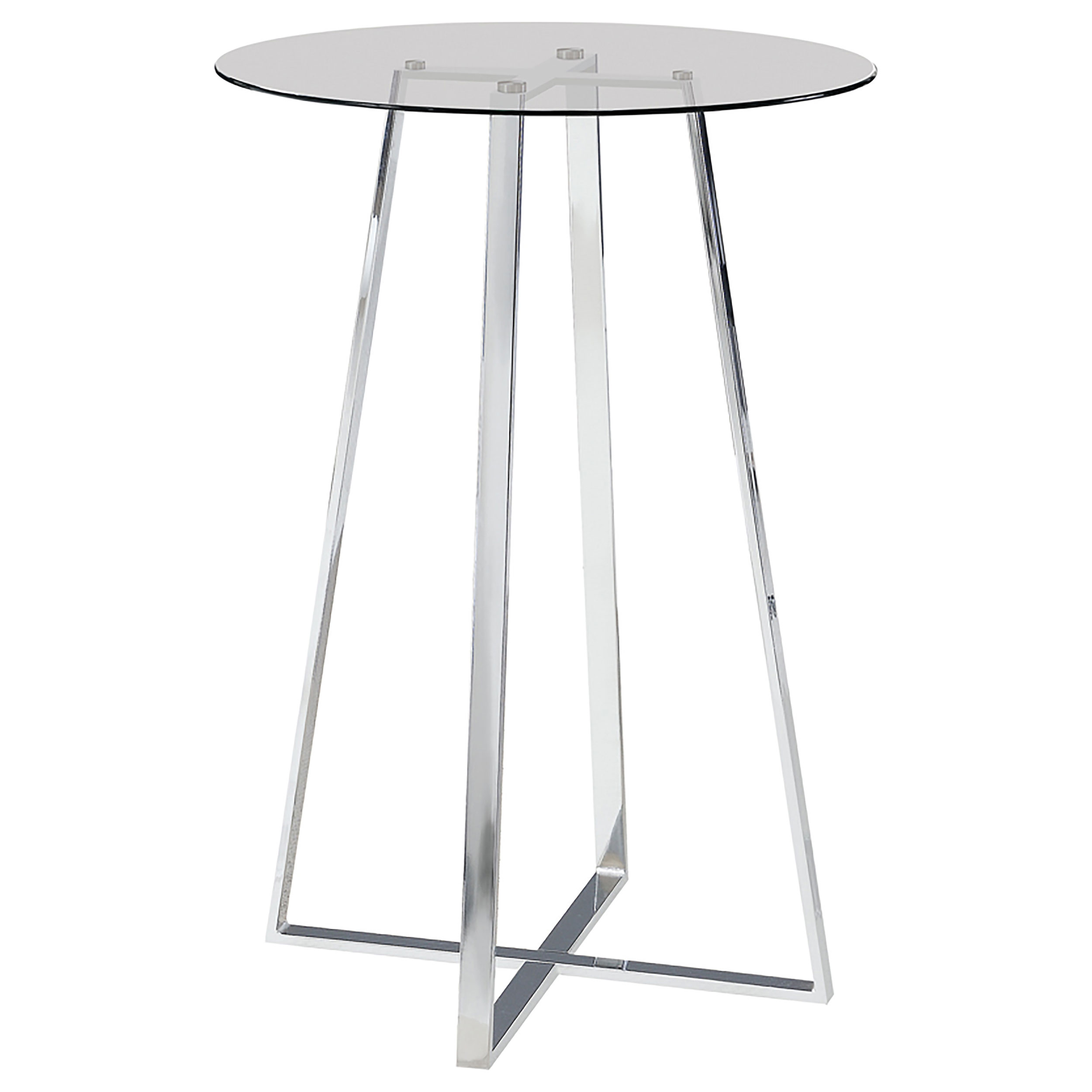
Because a glass top is transparent, the base is fully visible from all angles, making the base design as important as the top itself. Pedestal and single-column bases allow chairs to be positioned at any point around the table, provide the best legroom, and present a clean visual beneath the glass. Four-leg bases in metal (chrome, brushed nickel, matte black, gold) create a strong graphic element visible through the top and restrict corner seating. Sculptural bases — X-form, trestle, geometric — become a design statement that the transparent top displays rather than conceals. Match the metal finish of the base to other metal elements in the room, such as light fixtures or hardware.
What are the practical trade-offs of a glass dining table?
Glass tops are easy to clean of food and liquid spills — a glass cleaner and microfiber cloth restore the surface quickly. The trade-offs: fingerprints and water spots are highly visible and require frequent cleaning in households with heavy daily use; hot dishes cannot be placed directly on the glass surface (heat can cause stress fractures in tempered glass — always use trivets); and the transparent surface reveals anything stored or visible beneath the table, including placemats kept under the top or the underside of base construction. Glass tables are not ideal for households with young children who knock over glasses frequently or place heavy impact loads on the table surface.